
Why Kids Should Not Have Homework: Let Children Learn, Play and Enjoy Their Childhood
Remember when you were a child and the school bell rang? It meant freedom. You could go home, play with your friends, ride your bicycle, climb a tree, read a book or simply do absolutely nothing. School was over, and you could finally enjoy being a child.
Today, things are rather different. For many children, the school bell doesn't signal the end of their working day. It merely marks the beginning of another shift: homework, worksheets, revision, tuition classes, assessment preparation and, for some unfortunate souls, additional enrichment programmes.

By the time everything is completed, it can be well into the evening. Dinner becomes a hurried affair, family conversations are squeezed into whatever time remains, and bedtime is often negotiated like an international peace treaty.
And we wonder why our children are tired, stressed and sometimes reluctant to go to school.
Here's a question worth asking: If we believe adults deserve a healthy work-life balance, why don't we extend the same consideration to children?
Homework has long been regarded as an essential part of education. The conventional argument is that it reinforces classroom learning, develops discipline and prepares children for examinations. These are reasonable objectives. But somewhere along the way, we seem to have confused the quantity of studying with the quality of learning.
Perhaps it's time to reconsider whether children really need homework, particularly when they have already spent most of their waking day at school.
This isn't an argument against education, academic achievement or the importance of developing good study habits. Rather, it's an argument for recognising that children have developmental, emotional, physical and social needs that cannot be fulfilled by sitting at a desk with a textbook.
Here are seven reasons why we should seriously consider giving children their afternoons and evenings back.
1. Children Already Have a Full-Time Job Called School
Let's start with something fairly obvious: children spend a considerable amount of time at school.
Depending on their age, school system and extracurricular commitments, many children spend six to eight hours or more attending lessons, completing classroom activities and participating in school programmes. In Singapore and other academically competitive Asian education systems, the school day can feel particularly demanding.
Now imagine an adult working an eight-hour day, followed by another two or three hours of compulsory work at home.
Would that be considered reasonable?
Most adults would probably object. They might argue that they have already fulfilled their professional responsibilities and deserve some personal time. Some would even complain to their employers if they were expected to answer emails, prepare reports or complete additional assignments every evening without compensation.
Yet this is precisely what we routinely expect of children.
School is their workplace. Their teachers are their supervisors, lessons are their meetings, tests are their performance reviews, and homework is their unpaid overtime.
Of course, there are differences between adult employment and childhood education. Children attend school to develop knowledge and skills, not to earn a salary. Nevertheless, the underlying principle remains: Concentration, energy and motivation are finite resources.
After spending hours listening to teachers, processing information, interacting with classmates and following instructions, children need time to decompress.
Expecting them to immediately switch into another extended period of academic work may not be the best way to encourage meaningful learning.
Instead of automatically assigning homework every day, schools could make better use of classroom time. Teachers can incorporate revision, practice exercises and opportunities to clarify misunderstandings into lessons, allowing children to consolidate their learning before going home.
If a child consistently needs several additional hours to understand what was taught in class, perhaps the solution should be to examine the teaching approach, classroom workload or individual learning needs rather than simply assigning more homework.
2. Children's Brains Need More Than Academic Stimulation
Children are not miniature adults. Their brains and bodies are still developing, and their needs are considerably different from those of grown-ups.
During childhood and adolescence, the brain undergoes significant development, particularly in areas associated with executive functions such as planning, decision-making, impulse control and emotional regulation.
These abilities do not develop simply by spending more time studying.
Children also need opportunities to move, explore, experiment, socialise and engage in activities that challenge them in different ways.
Physical activity, for example, is not merely a way to burn off excess energy. It contributes to physical health, cognitive development and emotional wellbeing.
The World Health Organization recommends that children and adolescents aged 5–17 engage in an average of at least 60 minutes of moderate-to-vigorous physical activity daily. Such activity is associated with benefits including improved fitness, bone health, cognitive outcomes and mental health.
Think about what happens when a child spends most of the day sitting in a classroom, followed by another few hours sitting at a desk doing homework.
When exactly is that child supposed to get sufficient exercise?
And it's not just physical activity that matters. Children need unstructured time, too.
When children are allowed to play without adults constantly directing their activities, they learn to make decisions, negotiate with others, solve problems and manage disagreements. Building a cardboard fort, inventing a game or figuring out how to ride a bicycle involves learning that no worksheet can fully replicate.
There is a difference between being academically occupied and being meaningfully engaged in development.
We should be encouraging both.
3. Children Deserve a Work-Life Balance, Too
Here's another question for parents: When was the last time you complained about having too much work?
Perhaps your boss sent you an email at 11pm. Perhaps you had to work over the weekend. Or perhaps you simply wanted to enjoy a quiet evening without thinking about your next presentation or deadline.
Most adults understand the importance of maintaining boundaries between professional responsibilities and personal life.
We recognise that spending every waking hour working is unhealthy. We encourage people to pursue hobbies, spend time with loved ones, travel, exercise and enjoy their personal interests.
So why should children be any different?
Children have interests and ambitions that extend well beyond mathematics, English and science. Some love music, others enjoy drawing, dancing, football, swimming, building things or exploring nature.
These activities aren't necessarily distractions from education. They are part of education in a broader sense.
A child learning to play the piano develops patience, concentration and perseverance. A child participating in team sports learns cooperation, communication and resilience. A child building model aeroplanes develops spatial awareness and problem-solving skills.
Even seemingly unproductive activities have value.
Reading a comic book, playing with Lego, listening to music or simply daydreaming can provide opportunities for imagination and creativity.
If every afternoon and evening is consumed by homework, children have fewer opportunities to discover what they genuinely enjoy.
We often tell children to follow their passions when they grow up. But how are they supposed to discover those passions if we don't give them the time to explore?
A childhood should not be reduced to a never-ending preparation for adulthood.
It should be a period in which children have the freedom to discover who they are, what they enjoy and what they might want to become.
4. Family Time and Social Relationships Are Part of Growing Up
Academic achievement is important, but it isn't the only measure of a child's development.
Children also need to develop meaningful relationships with their parents, siblings, friends and wider communities.
Unfortunately, excessive homework can eat into precisely the time needed to nurture these relationships.
Consider a typical weekday evening in a busy Asian household.
Parents return from work, children return from school, and everyone is tired. Dinner is prepared, homework is taken out, and parents may spend the next few hours supervising assignments, checking answers and explaining concepts.
Before anyone realises it, it's time for bed.
Where is the opportunity for a proper family conversation?
Where is the time for parents to hear about their child's day, discuss something interesting or simply have a laugh together?
Family relationships are built through everyday interactions, not just special occasions. Sharing meals, playing board games, going for walks and having casual conversations help children develop a sense of belonging and emotional security.
Friendships are equally important. Playing with other children teaches social skills that cannot be acquired entirely through textbooks. Children learn to share, cooperate, negotiate, resolve conflicts and understand different perspectives.
These are precisely the interpersonal skills that employers increasingly value in the workplace.
Ironically, we may be sacrificing opportunities to develop important life skills in our determination to improve academic performance.
A child who achieves excellent examination results but struggles to communicate, collaborate or manage relationships may find that academic success alone is insufficient preparation for adult life.
Education should prepare children for life, not just the next examination.
5. Children Need Time in Nature: What We Can Learn from Scandinavia
One of the most interesting things we can learn from Scandinavian countries is their appreciation of the outdoors and the importance of allowing children to experience nature.
In Norway, Sweden and Denmark, the concept of friluftsliv (pronounced approximately free-loofts-leev) is deeply rooted in the culture.
The Norwegian word literally translates to “open-air life”. However, it represents much more than simply going outdoors. It describes a way of life that embraces spending time in nature, enjoying outdoor recreation and appreciating the natural environment.
Friluftsliv encourages people to make outdoor activities part of their everyday lives, rather than treating them as something reserved for holidays or special occasions.

For children, this could mean hiking through forests, exploring streams, climbing rocks, cycling, camping, playing in parks or simply spending time outdoors with friends and family.
The beauty of this philosophy is that it doesn't require children to achieve anything.
There doesn't have to be a lesson plan, an instructor or a measurable outcome. Children are free to explore, ask questions, get their hands dirty and learn through experience.
And there is research supporting the value of these experiences.
A systematic review published in 2019 examined 84 publications on immersive nature experiences among children and adolescents. It found conditional evidence of benefits for self-esteem, self-efficacy, resilience, and academic and cognitive performance. The researchers also found that children tend to engage in more physical activity in natural environments than in comparison settings.
Another study published in Pediatrics in 2021 reviewed 296 studies examining the relationship between nature exposure and children's health. The findings supported a positive relationship between contact with nature and children's health, particularly physical activity and mental health. The researchers did, however, caution that differences in study methods and limitations in the evidence made it difficult to establish cause and effect conclusively.
Of course, Scandinavia isn't a magical place where every child spends their afternoons roaming through forests. A 2025 study of Norwegian children aged 6–12 found that their engagement with nature had actually declined between 2013 and 2023. The proportion of children who played or spent time in forests or other natural spaces more than weekly fell from 47 percent to 29 percent. This suggests that even countries with strong outdoor traditions need to make a conscious effort to protect children's opportunities for outdoor play.
We don't necessarily need a forest in our backyard to embrace friluftsliv.
We can take our children cycling around the neighbourhood, explore nature parks, go hiking, visit the beach, grow vegetables in the garden or simply spend an afternoon at the playground.
The important thing is to give children opportunities to experience the world beyond the classroom.
Perhaps instead of spending another two hours completing worksheets, your child could spend that time discovering insects in a nature reserve, learning to identify plants or simply enjoying the freedom of running around outdoors.
Those experiences are valuable, too.
6. More Homework Does Not Necessarily Mean Better Academic Results
One of the strongest arguments traditionally used to justify homework is that it improves academic performance.
The logic seems straightforward: the more children practise, the better they become.
But is this always true?
Research suggests that the relationship between homework and academic achievement is more complicated than we might think.
A frequently cited research synthesis by education researcher Harris Cooper and his colleagues, published in 2006, examined studies on homework and academic achievement. The researchers found a generally positive relationship between homework and achievement, but an important distinction emerged: the relationship was stronger among students in Grades 7–12 than among younger students in Grades K–6.
In other words, homework appeared to offer less academic benefit to younger children than to older students.
A more recent systematic review published in Campbell Systematic Reviews in 2024 examined experimental research on homework among K–12 students.
The review found that homework could improve primary school students' academic performance, particularly arithmetic computation and problem-solving. However, the researchers could not establish the optimal amount of time children should spend on homework.
Importantly, the review also highlighted that the available experimental evidence was limited, with much of it coming from studies conducted decades ago. More high-quality research is needed to determine how much homework is genuinely beneficial.
The OECD's PISA 2022 research offers another interesting perspective.
Across OECD countries, students reported spending an average of 1.5 hours per day on homework. The OECD found that mathematics performance was positively associated with homework time up to approximately two hours per day. Beyond that point, additional homework time was negatively associated with mathematics performance.
Students in education systems where more pupils spent three hours or more on homework also tended to perform less well in mathematics than those in systems where homework time was more moderate.
However, the OECD cautions that these are associations, not proof that excessive homework causes lower academic performance. Students who struggle academically may simply need more time to complete their work.
These findings don't mean that every homework assignment is pointless. Nor do they suggest that children should never practise what they learn.
Rather, they challenge the assumption that more homework automatically produces better results.
There is a difference between purposeful practice and repetitive busywork.
A short mathematics exercise that helps a child understand a difficult concept may be useful. Completing 50 nearly identical questions simply because more practice is assumed to be better may not be.
Similarly, reading for enjoyment can develop vocabulary and comprehension without turning every reading session into another compulsory assignment.
The emphasis should be on the quality of learning, not the number of worksheets completed.
7. Sleep Is Not a Luxury That Children Should Have to Sacrifice
Here's something that should concern every parent: when homework takes up too much time, something else usually has to give.
And quite often, that something is sleep.
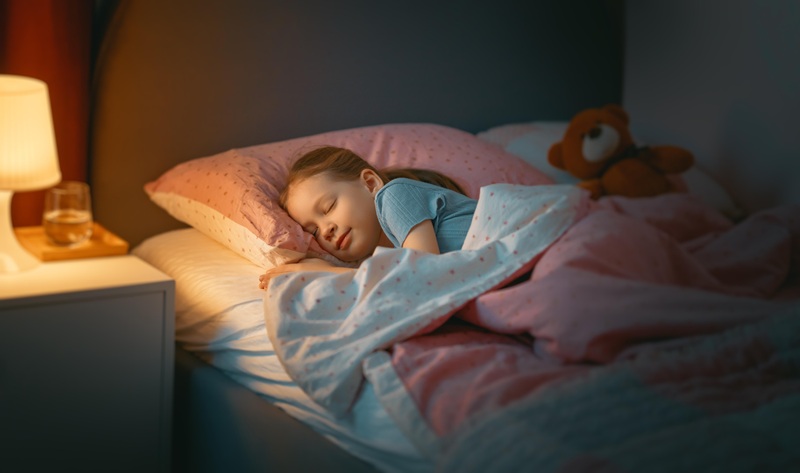
Children who spend their evenings completing assignments may end up going to bed later than they should. This becomes particularly problematic when they have to wake up early for school the following morning.
The consequences of insufficient sleep extend far beyond feeling tired.
Sleep plays an important role in memory consolidation, attention, emotional regulation, physical growth and overall development.
According to recommendations from the American Academy of Sleep Medicine, children aged 6–12 should regularly get between nine and 12 hours of sleep per day, while teenagers aged 13–18 should get between eight and 10 hours.
Regularly getting insufficient sleep is associated with problems involving attention, behaviour and learning.
Think about that for a moment.
We assign children homework because we want them to learn more effectively. Yet if the workload leaves them with insufficient time to sleep, we may be undermining some of the very abilities that help them learn.
A well-rested child is generally better positioned to concentrate, process information and manage emotions.
Wouldn't it make more sense to protect their sleep rather than sacrifice it for another worksheet?
Parents should be particularly mindful of this when children have several assignments due on the same day, examinations approaching or additional tuition commitments.
Sleep should be a priority, not whatever happens after all the work is finished.
If Not Homework, Then What Should Children Do After School?
Some parents may understandably wonder whether eliminating homework would make children less disciplined or academically prepared.
That's a legitimate concern. Children need to develop responsibility, perseverance, good learning habits and the ability to work independently.
But homework is not the only way to develop these qualities.
Instead of automatically filling children's evenings with academic assignments, we could encourage activities that develop different aspects of their personalities and abilities.
Here are some alternatives worth considering.
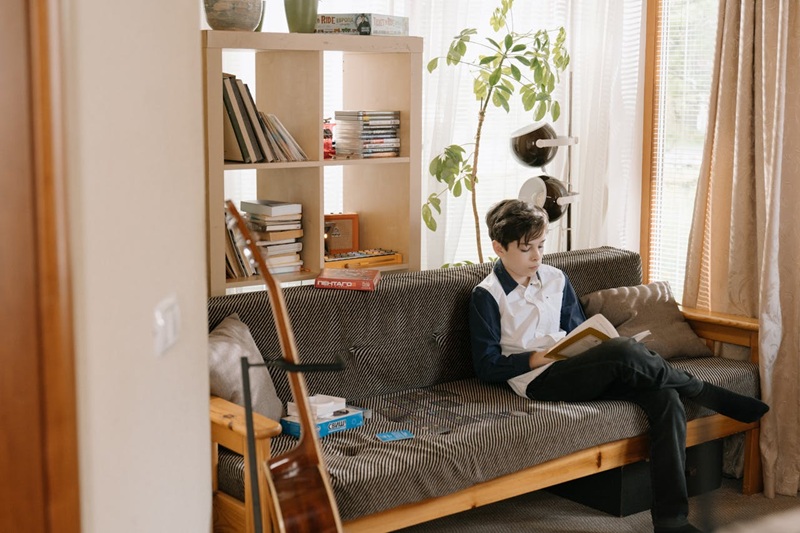
1. Encourage independent reading
Reading should be something children enjoy, not another examination preparation exercise. Let them choose books that interest them, whether it's fiction, biographies, comics, science books or magazines.
The objective is to cultivate a lifelong love of reading rather than simply complete a prescribed number of pages.
2. Make physical activity part of everyday life
Encourage children to participate in sports, cycling, swimming, dancing or simply playing outdoors.
Physical activity supports healthy development while teaching valuable lessons about teamwork, perseverance and resilience.
3. Give children opportunities to explore their interests
Whether your child enjoys music, art, cooking, robotics, photography or gardening, give them opportunities to pursue those interests.
Not every hobby needs to become a career or generate an achievement certificate. Sometimes, enjoying something simply because it is fun is reason enough.
4. Teach practical life skills
Children can learn plenty of useful things outside the classroom.
Cooking a simple meal, doing laundry, organising their belongings, managing pocket money and helping with household chores all develop independence and responsibility.
These are skills they will eventually need as adults.
5. Make time for family and friends
Have dinner together, play board games, visit relatives or simply spend time talking.
Encourage children to maintain friendships outside school and give them opportunities to socialise without every interaction being organised around a structured activity.
6. Let them experience boredom
This might be the most difficult suggestion for some parents.
We have become accustomed to filling every available moment with activities, lessons and entertainment. Yet children don't need to be constantly occupied.
Allowing them to experience boredom gives them an opportunity to decide what to do with their time. They might invent a game, draw something, build a Lego structure or come up with an entirely unexpected idea.
Sometimes, the best ideas emerge when nobody is telling children what to do.
What Schools and Parents Can Do Differently
Eliminating homework entirely may be difficult to implement, particularly in education systems where examinations and academic competition play an important role.
However, we can certainly rethink how much homework children receive and what purpose it serves.
Schools could consider adopting several practical measures:
- Prioritise quality over quantity: Assign meaningful exercises that reinforce important concepts rather than repetitive worksheets designed merely to keep children occupied.
- Complete more practice during school hours: Give students opportunities to practise, ask questions and receive feedback while teachers are available to help.
- Coordinate assignments across subjects: Teachers should communicate with one another to avoid overwhelming students with multiple deadlines on the same day.
- Protect weekends and holidays: Children need genuine opportunities to rest and spend time with their families. School holidays should not simply become extended homework periods.
- Consider age and individual needs: Younger children generally need more opportunities for play and exploration, while older students may benefit from carefully designed independent study.
- Make homework purposeful: If an assignment is given, children should understand what they are expected to learn from it.
Parents also have a role to play.
We should resist the temptation to measure our children's productivity by how many hours they spend studying. Instead, pay attention to whether they are developing curiosity, independence, confidence and a genuine interest in learning.
If your child is constantly exhausted, anxious about schoolwork or has little time for anything beyond studying, it may be worth discussing the workload with their teachers.
Academic achievement should not come at the expense of a child's wellbeing.
Let Children Be Children
We live in a world that places enormous emphasis on achievement.
Parents want their children to enter good schools, obtain excellent examination results, secure places at prestigious universities and eventually build successful careers. These aspirations are understandable. We all want the best for our children.
But somewhere along the way, we may have become so preoccupied with preparing children for their future that we have forgotten to let them enjoy their present.
Childhood is not a rehearsal for adulthood. It is a precious stage of life that cannot be repeated.
Children deserve time to play, explore, make friends, pursue their interests, spend time with their families and discover the world around them. They deserve to enjoy their afternoons without worrying about another pile of worksheets waiting at home.
And perhaps most importantly, they deserve enough time to rest.
This doesn't mean abandoning academic standards or expecting children to learn everything effortlessly. It means recognising that education involves much more than what happens inside a classroom.
The ability to think independently, communicate effectively, solve problems, manage emotions, build relationships and adapt to unfamiliar situations is just as important as knowing how to solve a quadratic equation.
We want our children to grow into capable, well-rounded adults who are curious about the world and confident enough to pursue their ambitions.
But we shouldn't forget that they also need to grow into happy, healthy human beings.
Perhaps it's time we stopped asking how much more homework children can handle and started asking a different question:
What could our children become if we gave them more time to simply be children?

Proud father of two lovely kids, who at times pushed me to seriously consider editing out the word “lovely” from this sentence. (I am not alone in this.)