
Keeping Children Safe in VR and Immersive Spaces
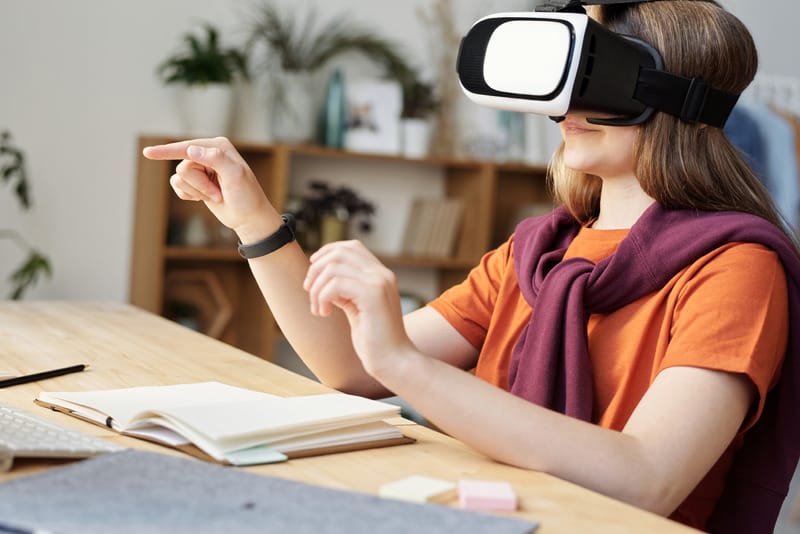
As immersive technologies like virtual reality (VR) move quickly from niche entertainment into mainstream education and leisure, parents must ask: is VR safe for our children? The technology offers immersive learning, global connectivity and next-gen experiences. But for children, it also opens up new frontiers of risk: excessive screen time, disorientation, unmoderated social interactions and privacy pitfalls.
Drawing on recent safety research and expert guidance, here’s what you need to know (and do) to support your child stepping into virtual worlds with care and confidence.
Understanding the Appeal and the Risks
VR operates differently from traditional screens. When a child wears a headset, they are enveloped in a 3D, fully immersive environment. On one hand, that’s powerful. The potential to step into ancient history, simulate chemistry experiments or collaborate in virtual rooms is immense. Studies of VR use in education show younger learners engage more, absorb material faster and respond positively to simulation-based tasks.
On the other hand, this immersion heightens risk factors. According to recent research, children using VR may receive less parental supervision, must contend with intense sensory input, and face social risks when exploring multiplayer or metaverse-type spaces. For example, while standard video games surround a player, VR puts the player into the world, meaning physical safety, emotional intensity, and social boundaries all require new attention.
Age Matters, But So Does Readiness
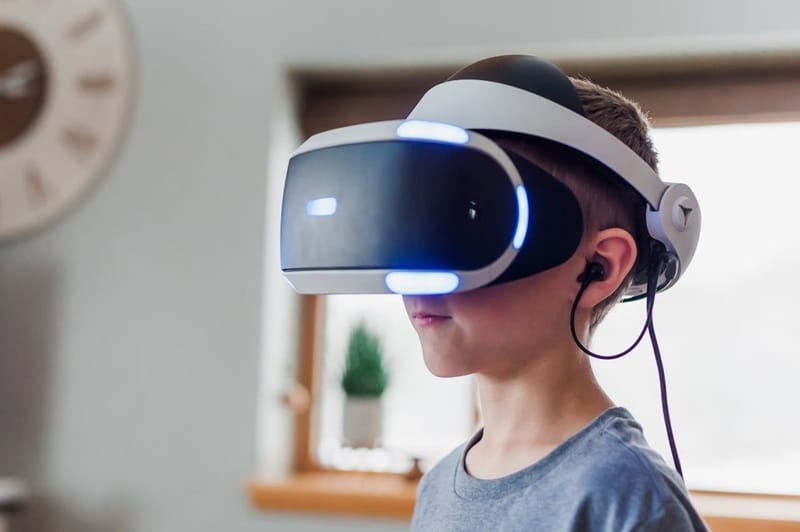
The often-quoted manufacturer guideline in the US is: “12 or 13 years and up” for full VR headset use. Indeed, VR headsets are typically calibrated for adult physical proportions and may cause dizziness, eye strain or motion-sickness in younger children. For this reason, many experts suggest a “wait and watch” approach for children under 10, and closely supervised sessions for those aged 10–12.
But age alone isn’t enough. Ask yourself: is the child emotionally mature? Do they understand the difference between virtual and real? Are they able to follow safety rules and step away if they feel uncomfortable? One parent-research study discovered that while many parents bought VR headsets, fewer than half used built-in safety controls, largely because they underestimated risks.
Physical and Sensory Safety: Clearing the Play Space
Even if the software is safe, the physical environment needs caution. VR eliminates peripheral vision, and users may trip, bump into furniture or collide with walls. Ensure there's a clear space of at least 2 × 2 metres, remove obstacles, and supervise younger users until they become familiar with the headset.
Sessions should be short and interspersed with breaks. Common recommendations: begin with 10–15 minutes, then extend to no more than 30–40 minutes while watching for signs of discomfort, nausea or emotional overwhelm.
Social VR and Metaverse: Supervision in 3D Spaces
One of the strongest attractions, and greatest risks, of VR for kids is social interaction. Universes like Meta Horizon Worlds, VRChat and other avatar-based metaverses allow children to meet strangers, chat via voice or text, and roam freely. A recent investigation found a significant proportion of under-13 users in a “10+” platform despite age-gates, raising serious concerns.
In Asia, where shared space and peer networks are tight, parents must activate and enforce social settings. Platforms increasingly provide parent dashboards: for example, Horizon Worlds lets parents manage voice chat, presence visibility and personal boundaries.
Key questions to ask:
- Who can my child talk to in the VR world?
- Is voice chat enabled only for trusted contacts?
- Are avatars and spaces age-appropriate?
- Can we monitor and audit session logs?
Privacy, Data and Moderation: Invisible Risks
It’s not just about what the child does in VR, it’s also what the platform does with them. Parental control systems are rapidly evolving, but research shows many parents are unaware of the privacy and security dimensions of VR. For example, data collected in VR can include location, hand movement, speech and social network behaviour.
Furthermore, whistle-blowers at VR giant Meta allege that child-safety research was suppressed and safeguards for underage users were implemented only reactively.
For parents, this means being proactive: opt for headsets or learning systems with strong parental controls, ensure third-party moderation is robust, and decide whether your child’s usage remains within educational or trusted ecosystems rather than open social “hang-outs”.
Educational Possibilities, With Boundaries
Used thoughtfully, VR delivers benefits: deeper engagement, experiential learning and cross-discipline creativity. For example, children using VR may explore ancient ruins in educational apps, conduct virtual experiments or collaborate with peers globally.
For parents, the message is clear: frame VR as an enrichment tool, not the default playtime. Introduce it as part of a balanced routine of reading, movement, outdoor play and tech-free social interaction. One school in Singapore notes that children who see VR as a “reward activity” rather than a mainstay demonstrate healthier screen habits.
Practical Steps for Parents
Here are actions you can take today:
Ensure offline transitions – After a session, switch to a calming real-world task to help ground the experience.
Research the device and platform – Ensure it has age-appropriate settings, robust moderation and clear guidelines.
Co-experience the first sessions – Use the headset yourself, preview apps and establish it as a shared family activity.
Set a VR contract or agreement – Define time limits, safe area rules, approved friends and break rules.
Monitor and review frequently – Ask your child how they felt, review chat logs or session summaries, watch for mood shifts or sleep disruption.
Make alternative activities available – Promote non-screen options so VR is part of a varied lifestyle.
Educate about social behaviour – Teach children that even avatars deserve respect, and that “virtual” doesn’t mean “invisible”.
Embracing VR, Not Full Immersion
Virtual reality doesn’t have to be all risk and resistance for parents. When introduced thoughtfully, under supervision and with safeguards, it can become a meaningful part of modern childhood.
As one VR safety review framed it, the key isn’t “Is VR bad?” but rather “Is VR used well?” For parents, the goal isn’t to ban VR, it’s to guide children into it competently. By pairing curiosity with caution, you’re helping your child explore virtual worlds while staying firmly rooted in reality.
Because ultimately what matters isn’t how far they go in VR, it’s that they return to us safe, curious and ready to explore again another day.

Our aim is to help our children discover their talents, realise their full potential, and develop a passion for life-long learning.