Between Parent and Child [Book Review]
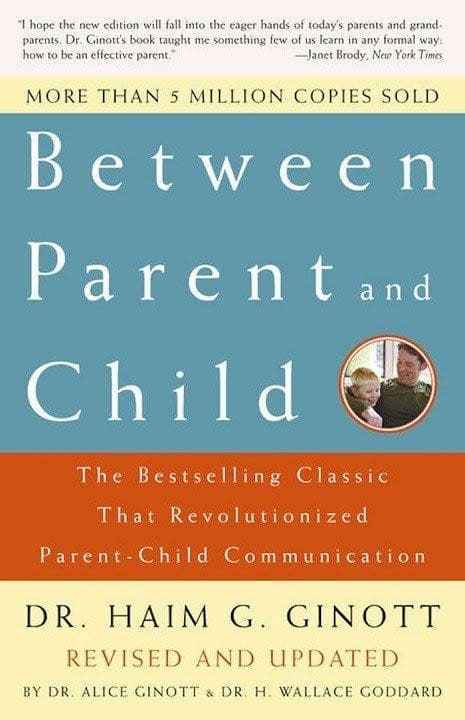
What if the difference between a nagging parent and a nurturing one came down to simply choosing the right words? Between Parent and Child by Dr. Haim Ginott (revised and updated by Dr. Alice Ginott and Dr. H. Wallace Goddard) proposes that it’s not only possible, but one that can shift the tone of your family life profoundly.
First published in 1965, this timeless classic reshaped the way generations of educators and parenting experts approach communication. Ginott's insights remain remarkably relevant, and this updated edition ensures they speak as clearly to today's digital-age families as they did in his time.
Ginott challenged the conventional parenting paradigm with a deceptively simple premise: empathy and discipline aren’t mutually exclusive. Rather than resorting to threats, sarcasm, or bribes, he calls on parents to respond in ways that honour feelings while guiding behaviour. His hallmark approach, distinguishing between the child and the behaviour, sets the foundation for modern empathetic parenting strategies. Ginott encouraged parents to say, “I see a messy room,” instead of labelling kids as “lazy” or “sloppy”, preserving their dignity while addressing issues.
This philosophy was revolutionary, influencing the work of parenting luminaries such as Adele Faber and Elaine Mazlish (How to Talk So Kids Will Listen & Listen So Kids Will Talk) and John Gottman (Raising an Emotionally Intelligent Child). Gottman, for one, credits Ginott’s principles as foundational to his own parenting research.
By teaching parents to respect a child’s emotions and speak with compassion, Ginott opened a path toward parenting that educates with love, not with force.
The revised edition, published in 2003, preserves Ginott’s warm, accessible voice while refreshing the content for modern readers. Edited by clinical psychologist Dr. Alice Ginott and family specialist Dr. H. Wallace Goddard, it preserves the compassionate tone and practical wisdom of the original, while offering:
- Solutions to discipline without threats or punishment
- Techniques to criticise without demeaning and praise without judgement
- Guidance on expressing anger constructively
- Advice on acknowledging children’s feelings instead of arguing
- Strategies to cultivate trust and self-confidence
Updates include modernised examples and sensitive framing, all while maintaining the book’s elegant clarity and timeless relevance.
The Power of Language and Emotional Intelligence
Ginott demonstrates again and again that words shape a child’s inner world. He famously warned that children internalise harsh labels: being told they are “lazy” or “stupid” is more damaging than any single act of misbehaviour. Conversely, specific praise, such as “I really like how you worked hard on your math problems”, builds not only confidence, but a resilient self-image.
Beyond praise, Ginott offers formulas for clear boundaries that preserve self-worth. A memorable example: when a child kicks out of anger, Ginott advises calmly stating, “No hitting. If you're upset, use words instead.” It’s firm, fair, and teaches emotional regulation, not shame.
Empathy That Teaches, Not Spoils
Perhaps Ginott’s most profound contribution is showing that acknowledging a child’s feelings is not permissive parenting; it’s emotional education. When feelings are met with resistance (“Don’t cry!”) or dismissal, they intensify. But when met with empathy (“You feel disappointed. That’s okay.”) emotions become manageable. Ginott’s approach invites children into understanding rather than isolation.
This principle is now a cornerstone of reflective parenting: parents develop emotional attunement (a concept supported by attachment research), which helps children to regulate, reflect, and develop responsibility.
In many Asian cultures, where respect and achievement are often prioritised, Ginott’s message may feel refreshingly countercultural. He shifts the focus from control to connection, from obedience to understanding. Instead of the usual “You must listen because I’m older,” he offers reason, clarity, and recognition of emotional complexity, an approach that builds long-term respect rather than short-lived compliance.
For families balancing tradition with modern emotional intelligence, Between Parent and Child offers a parenting language that nourishes both discipline and dignity.
Tip: Start your next family conversation with an “I” message: instead of “You forgot your homework,” say “I feel worried when your homework is forgotten because I know how busy your school days are.” It’s a small change—as Ginott taught—but one that can shift the tone of your family life profoundly.


Community Ambassador; as someone who was raised in a rather privileged family, I hope to address the inequity in educational outcomes based on the circumstance of birth. Bounced around between Australia and Singapore a fair bit.