
Anxious Kids, Anxious Parents [Book Review]

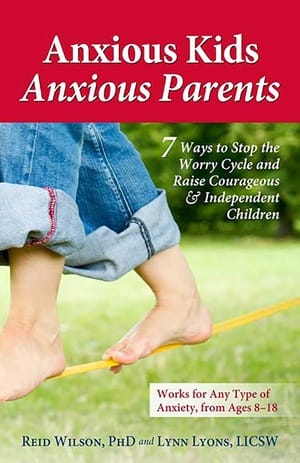
In a world where childhood anxiety has risen to near-epidemic proportions, Anxious Kids, Anxious Parents arrives not just as another parenting book, but as an urgent call to action. Co-authored by anxiety expert R. Reid Wilson and therapist-educator Lynn Lyons, this book is both a compassionate guide for families and a bold challenge to our most instinctive ways of responding to fear. Written with clarity, empathy, and clinical insight, it offers a framework that can dismantle the worry cycle gripping children and the adults who love them.
One of the most compelling aspects of this book is how it reframes anxiety not as a defect to be fixed immediately, but as a human experience to understand and address with strategy rather than panic. Wilson and Lyons begin by confronting a universal truth: anxiety feels terrible, and when both parents and children are anxious, the cycle can become self-reinforcing. What often happens, they note, is that in trying to protect children from their fears, parents unwittingly reinforce avoidance and heighten anxiety over time. This insight alone is enough to shift perspectives, especially in a culture that often tells us to “soothe instantly” and “eliminate discomfort at all costs”.
When Instincts Mislead
At its core, Anxious Kids, Anxious Parents challenges our natural, protective instincts. As parents, we are wired to comfort and to remove threats. But Wilson and Lyons make a persuasive case that when we consistently shield our children from uncomfortable feelings, we inadvertently teach them that discomfort is intolerable, and that fear should be avoided at all costs. In essence, children learn that anxiety is dangerous, not just unpleasant, which fuels the very cycle we hope to break.
For example, when a child expresses fear of school, the instinctive parental response might be to negotiate, reassure, or even keep them home. But while this may bring immediate relief, it sends a powerful message: fear wins. The authors advocate instead for a structured approach that gently exposes children to their fears in manageable ways, building confidence and teaching them that they can cope, even when they feel afraid.
Practical Tools for Real Families
The strength of this book lies in its practicality. Wilson and Lyons don’t stop at psychological theory; they arm parents with concrete tools that are realistic and effective. Each chapter introduces actionable strategies (backed by clinical experience) for addressing separation anxiety, social fears, perfectionism, bedtime worries, school refusal, and pervasive “what-if” thinking. Rather than quick fixes, these approaches guide readers toward sustainable change over time.
One of the most powerful concepts is the idea of confidence building. Rather than asking children simply to “stop being scared”, the authors encourage parents to help their children practice bravery in small, intentional steps. This shift in language, from “fear reduction” to “confidence building”, reflects a deeper philosophy: courage isn’t the absence of fear, but the capacity to act despite it. Parents are encouraged to celebrate attempts, not just successes, teaching children that effort matters more than perfection.
Courage isn’t the absence of fear, but the capacity to act despite it.
Redefining Reassurance
Another standout contribution of the book is its treatment of reassurance: a behaviour that most parents use reflexively. Wilson and Lyons explain that while reassurance often feels comforting in the moment, it can actually reinforce the message that danger is imminent and certainty is necessary before one can feel safe. By learning to hold space for their child’s feelings without jumping to reassure, parents help their children tolerate uncertainty, one of the core drivers of anxiety.
This idea resonates deeply in our modern world, where certainty is rare and change is constant. Teaching children to live comfortably with uncertainty isn’t just a tool for reducing anxiety; it’s a lifelong advantage.
Parent Anxiety Matters Too
True to its title, Anxious Kids, Anxious Parents also acknowledges that parents themselves are often anxious, and that parental anxiety can unintentionally fuel children’s worry. The authors help parents recognise their own anxiety patterns and offer guidance on how to step back when worry threatens to take over. This dual focus on parent and child is one of the book’s greatest strengths. It recognises the family system as interconnected; change in one part inevitably influences the whole.
Parents are guided to reflect on their own responses with compassion, not guilt. By modelling calm problem-solving and tolerating discomfort themselves, parents can provide a powerful emotional anchor for their children. This, more than any number of coping skills taught in isolation, is what ultimately fosters emotional resilience.
A Paradigm Shift for an Anxious Generation
Anxious Kids, Anxious Parents feels like an antidote to an anxious era—not just for individuals, but for entire families, communities, and cultures that prize safety over resilience. Its wisdom is backed not just by clinical practice, but by a deep understanding of human development: anxiety is universal, but it does not have to dominate our children’s lives or our parenting.
For parents in Asia, where achievement pressure, academic stress, family expectations, and social comparison can create fertile ground for anxiety, this book offers both relief and a road map. It validates parental concern while steering caregivers toward evidence-based strategies that foster independence rather than dependence. Whether your child worries about school, social situations, health, or the unpredictable twists of growing up, the tools in this book are relevant, compassionate, and empowering.
While some parenting books are prescriptive or idealistic, Wilson and Lyons deliver a guide that meets families where they are, with nuance, support, and realism. Their message is neither dismissive of children’s feelings nor indulgent of avoidance; instead, it invites families to take balanced, courageous steps forward together.
Anxious Kids, Anxious Parents challenges deeply held instincts, equips parents with research-informed tools, and reframes fear not as something to erase, but as an opportunity to teach courage, resilience, and emotional maturity. This book doesn’t just help parents understand anxiety, it changes how parents relate to it, both in themselves and in their children.
For anyone concerned about childhood anxiety, and in a world where that concern has become nearly universal, this book offers clarity, practical guidance, and hope. It is essential reading for parents who want not only to calm worry, but to raise confident, independent, and brave children capable of navigating life’s inevitable uncertainties.


Our aim is to help our children discover their talents, realise their full potential, and develop a passion for life-long learning.