How To Become A Straight-A Student [Book Review]
In a world where academic pressure is as constant as Wi-Fi signals and students are expected to juggle studies, co-curriculars, part-time jobs, and social lives (both online and off), it’s no wonder that burnout is the unofficial mascot of high-performing teens. Enter How to Become a Straight-A Student by Cal Newport. This compact, pragmatic, and refreshingly hype-free guide promises academic excellence without selling your soul to the library gods. Yes, it sounds like a scam. But the beauty of Newport’s book is that it isn’t.
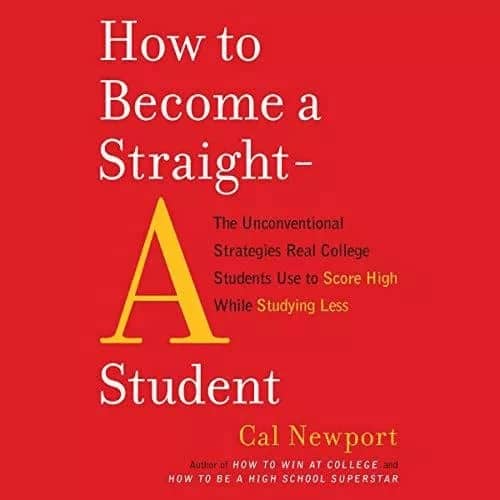
Written for university students but wholly relevant to senior high schoolers and even high-achieving secondary schoolers, this book offers a system that’s elegant in its simplicity: study smarter, not longer. Newport, himself a straight-A student who graduated from Dartmouth and earned a Ph.D. from MIT, admits up front that he’s not especially brilliant. What set him apart, he argues, was a willingness to engineer a system that worked efficiently, and to stick to it with monk-like discipline.
But How to Become a Straight-A Student isn’t just about time management or exam tips. It’s a mindset manual disguised as a study guide. At its heart, the book is about reclaiming time and mental space: showing students that they don’t need to become caffeine-fuelled zombies to ace their classes. In fact, Newport’s core belief is radical in its restraint: the best students are not the busiest; they’re the most intentional.
A Refreshingly Anti-Grind Mindset
Unlike many “success” books aimed at students, Newport’s tone is matter-of-fact and blessedly free of motivational fluff. He doesn’t advocate for all-nighters or colour-coded flashcards or waking up at 5 a.m. to rewrite your notes. Instead, he builds a case for what he calls the “pseudo-work trap”, the illusion that being busy means being productive. If you’ve ever seen your teen “studying” with 10 browser tabs open, their phone buzzing every three minutes, and their textbook serving as a coaster, you’ll know exactly what he means.
Newport’s antidote? Laser-focused, distraction-free blocks of study, short but effective review sessions, and smart prioritisation. His methods are geared toward high performance in as little time as possible, sometimes even less than an hour a day of actual studying. The trick, as Newport teaches, is not working harder but working with purpose.
For parents, this message is a breath of fresh air. Instead of pushing our children toward more tuition, more worksheets, or more hours logged on study apps, we can guide them toward developing discipline, self-awareness, and strategy. These are not just academic virtues; they’re life skills.
What’s Inside: Real Tools for Real Students
Newport breaks the book into three main parts: studying, writing, and time management. Each section reads like a mini-manual packed with tactics, examples, and what Newport calls “straight-A profiles”—interviews with real students who’ve mastered the techniques.
In the study section, he outlines how to take effective notes, retain information efficiently, and prepare for exams without stress. His emphasis on active recall and focused review over passive re-reading is supported by learning science, even if Newport doesn’t belabour the cognitive psychology behind it. For students buried under thick stacks of lecture notes, his message is clear: you don’t need more time; you need better methods.
The writing section is especially useful for humanities students. Newport teaches a step-by-step writing process that transforms intimidating term papers into manageable tasks. He demystifies outlining, drafting, and revising in a way that feels less like English class and more like engineering. Even students who claim to “hate writing” may find comfort in his systemised approach.
In the time management section, Newport introduces tools like the “plan tomorrow today” method and the “time-blocking technique,” which have since become staples of his broader productivity philosophy (also seen in Deep Work and Digital Minimalism). He doesn’t advocate for rigid scheduling but rather structured flexibility. Students are encouraged to plan their days with intention, allocating specific times for studying, resting, and even socialising.
A Book That Respects the Reader
What sets How to Become a Straight-A Student apart is the respect it pays to its audience. Newport never talks down to the reader. He assumes that students want to succeed, value their time, and are capable of change. This tone of respect, coupled with an almost scientific obsession with optimisation, makes the book an empowering read.
For parents, this means recommending a book that doesn’t nag or scold but equips. It gives students agency. It doesn’t assume they’ll get everything right from day one but gives them tools to iterate and improve. If your teen has ever said, “I’m just not good at exams” or “I study so much but still do badly,” this book might be the reframe they need.
Not a Silver Bullet, But a Solid Foundation
Of course, no book is perfect. Newport’s advice is skewed toward motivated students in traditional academic systems, and he doesn’t always account for neurodivergent learners or those facing systemic challenges. There’s little discussion of learning disabilities, mental health, or the pressures of high-stakes testing environments in Asia. Parents may need to supplement with more emotionally focused resources if their child is struggling not just with productivity but with motivation or self-esteem.
Still, Newport’s clarity and practicality make this book a standout. It doesn’t promise effortless success, but it does offer a realistic path to balance, efficiency, and academic confidence.
For parents looking to support their teens through school (and beyond), this book is a powerful, practical gift. It encourages responsibility, independent thinking, and a healthier relationship with learning. And, perhaps most importantly, it lets students know that academic excellence doesn’t have to come at the cost of their wellbeing. It just takes a bit of discipline, and a whole lot of common sense.


A big fan of MOOC, AI and data science. I am intrigued by how technology has transformed education and makes learning fun again.